
Cognitive Peptides
Cognitive peptides are synthetic amino acid sequences studied in laboratory settings for their effects on neurotrophic factor expression, neurotransmitter modulation, synaptogenesis, and neuroprotection. Unlike general nootropic supplements that act through broad or poorly defined mechanisms, research-grade cognitive peptides engage named molecular pathways including BDNF upregulation, GABAergic receptor modulation, HGF/c-Met signalling, and dopaminergic and serotonergic pathway modulation, with precision that makes results interpretable and reproducible in controlled experimental designs.
At Liberty Peptides, every cognitive peptide is independently tested to a minimum of 99%+ purity by a certified US laboratory using HPLC and mass spectrometry. Every batch ships with a full Certificate of Analysis documenting the exact purity figure, molecular identity confirmation, lot number, and test date. All products are supplied strictly for in-vitro laboratory research purposes and are not for human or animal consumption. Same-day shipping on orders placed before 12 PM EST, Monday through Friday.
[PRODUCT GRID]
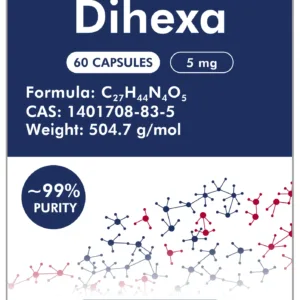

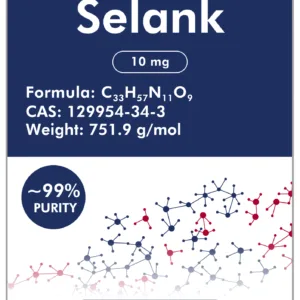
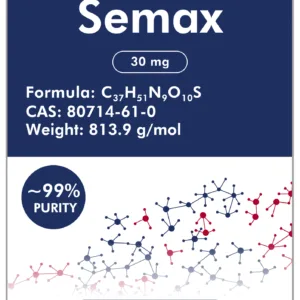
Compound Profiles and Research Mechanisms
Semax
Semax (Met-Glu-His-Phe-Pro-Gly-Pro) is a synthetic heptapeptide analogue of the N-terminal fragment of adrenocorticotropic hormone, specifically ACTH(4-7), with a stabilising C-terminal Pro-Gly-Pro tripeptide. It was developed at the Institute of Molecular Genetics of the Russian Academy of Sciences and has been approved as a pharmaceutical in Russia for use in acute ischaemic stroke and brain injury treatment. This regulatory history, combined with decades of published research, gives Semax the deepest clinical evidence base of any cognitive peptide currently available for laboratory research.
The primary mechanism is upregulation of BDNF (brain-derived neurotrophic factor) and NGF (nerve growth factor) gene expression. A single intranasal administration of Semax in rats produced a 3-fold increase in BDNF mRNA and a 2-fold increase in trkB mRNA in the hippocampus within 90 minutes, alongside increased BDNF protein levels and enhanced conditioned avoidance performance, suggesting that Semax affects cognitive brain function by modulating the hippocampal BDNF/trkB system (PMID: 16996037). In a human clinical study of 110 post-ischaemic stroke patients, Semax administration increased BDNF plasma levels regardless of rehabilitation timing, with elevated BDNF positively correlating with improved motor performance and Barthel index scores across the full five-month observation period (PMID: 29798983). Secondary mechanisms include dopaminergic and serotonergic pathway modulation, anti-inflammatory transcriptomic activity through IL-10 upregulation and IL-8 suppression, and inhibition of enkephalinase, the enzyme that breaks down endogenous calming peptides.
N-Acetyl Semax Amidate is a modified form incorporating N-acetyl and amidate terminal modifications that increase enzymatic stability and blood-brain barrier permeability compared to the base heptapeptide, producing a longer effective half-life and more efficient central nervous system delivery in preclinical models.
Researchers studying neuroprotective compounds alongside immune pathway modulation will find complementary research compounds in the immune peptides category.
Selank
Selank (Thr-Lys-Pro-Arg-Pro-Gly-Pro) is a synthetic heptapeptide analogue of the immunomodulatory peptide tuftsin, extended at the C-terminus with Pro-Gly-Pro to enhance metabolic stability. It was developed alongside Semax at the same Moscow research institute and is approved in Russia as an anxiolytic for the treatment of generalised anxiety disorder. A clinical trial in generalised anxiety disorder patients found Selank produced anxiolytic effects comparable to medazepam, a benzodiazepine, without sedation, cognitive impairment, tolerance, dependence, or withdrawal effects (Zozulya et al., 2008, PMID: 18454096).
The primary mechanism is GABAergic modulation. Selank alters the expression of genes encoding GABA receptor subunits and transporters in the frontal cortex, binds to GABAA receptors, and allosterically modulates GABAA receptor activity, producing anxiolytic effects through a mechanism that resembles benzodiazepines in outcome but not in pharmacology (PMC: PMC4757669). Secondary mechanisms include serotonin and dopamine system modulation, BDNF expression, and enkephalinase inhibition. A resting-state fMRI study in 52 healthy participants assessed the effects of Semax and Selank on whole-brain functional connectivity and found distinct effects of each compound on right amygdala functional connectivity with temporal cortex regions, providing imaging-level evidence of differential central nervous system activity (PMID: 32342318).
The research distinction between Semax and Selank is clear: Semax is the cognition-first compound, primarily studied for neurotrophic factor upregulation and neuroprotection. Selank is the anxiety-first compound, primarily studied for anxiolytic activity through GABAergic pathways with secondary cognitive benefits. This complementary profile means the two are frequently combined in research protocols studying the relationship between anxiety reduction and cognitive performance.
N-Acetyl Selank is a modified form with N-acetyl terminal modification that improves enzymatic stability and blood-brain barrier penetration compared to the base heptapeptide.
Selank also demonstrates immunomodulatory properties studied alongside other immune pathway compounds available in the immune peptides category.
Dihexa
Dihexa (N-hexanoic-Tyr-Ile-(6) aminohexanoic amide, developmental code PNB-0408) is a synthetic oligopeptide derived from angiotensin IV, engineered at Washington State University specifically to cross the blood-brain barrier and promote synaptogenesis through the HGF/c-Met receptor pathway. It operates through a mechanism fundamentally distinct from all other compounds in this category. Where Semax and Selank modulate neurotransmitter systems and neurotrophic factor expression, Dihexa promotes the physical construction of new synaptic connections rather than modulating the efficiency of existing ones.
Dihexa binds hepatocyte growth factor (HGF) and potentiates its activity at the c-Met receptor, triggering PI3K/Akt and MAPK/ERK signalling cascades that drive synaptogenesis, dendritic spine formation, and neurogenesis in hippocampal tissue. In preclinical studies, Dihexa restored spatial learning and memory performance in rodent models of Alzheimer’s-like cognitive impairment induced by scopolamine and amyloid-beta oligomer injection, with treated animals performing cognitive tasks at levels comparable to healthy controls. Histological analysis confirmed increased dendritic spine density in hippocampal CA1 pyramidal neurons. The compound crosses the blood-brain barrier effectively in preclinical models, reaching brain tissue concentrations within therapeutic ranges after subcutaneous or oral administration.
Researchers should note that all existing Dihexa evidence is preclinical. No human clinical trials have been registered or completed as of 2026. The compound has not advanced to clinical trials due to unresolved questions about chronic c-Met pathway activation and commercial barriers around patent protection.
Research Pathway Comparison
The three primary cognitive peptides in this category operate through distinct mechanisms that address different aspects of cognitive biology. The table below maps each compound to its primary research pathway, making it straightforward to select the appropriate compound for a specific research objective or to design multi-compound protocols that study complementary pathways without redundancy.
| Compound | Primary Research Pathway | Receptor Target | Key Research Applications | Research Status |
|---|---|---|---|---|
| Semax | Neurotrophic factor upregulation | BDNF/trkB system | Neuroprotection, memory formation, stroke recovery research | Approved pharmaceutical in Russia, published clinical trials |
| N-Acetyl Semax Amidate | Neurotrophic factor upregulation (enhanced) | BDNF/trkB system | As above with improved CNS bioavailability | Preclinical with enhanced stability data |
| Selank | GABAergic and serotonergic modulation | GABAA receptor | Anxiety-cognition interaction, stress resilience research | Approved pharmaceutical in Russia, published clinical trials |
| N-Acetyl Selank | GABAergic modulation (enhanced) | GABAA receptor | As above with improved CNS bioavailability | Preclinical with enhanced stability data |
| Dihexa | Structural synaptogenesis | HGF/c-Met receptor | Synaptic plasticity, neurodegeneration models, synaptogenesis quantification | Preclinical only |
The Semax and Selank combination is the most widely studied cognitive peptide pairing. Semax provides neurotrophic stimulation and dopaminergic enhancement. Selank provides GABAergic anxiolysis and serotonergic modulation. Studied together, they allow researchers to investigate the relationship between anxiety-pathway inhibition and neurotrophic pathway activation in cognitive performance models. The two have been directly compared in the fMRI functional connectivity study cited above, providing imaging-level documentation of their distinct central nervous system effects.
Dihexa is mechanistically incompatible with simple stacking alongside Semax and Selank due to the entirely different receptor system it engages. Researchers combining Dihexa with neurotransmitter-modulating peptides should design protocols that measure the effects of each pathway independently before assessing interaction effects.
Frequently Asked Questions
What are cognitive peptides?
Cognitive peptides are synthetic amino acid sequences studied in laboratory settings for their effects on specific neurocognitive mechanisms, including neurotrophic factor expression, neurotransmitter system modulation, and synaptic architecture. They differ from general nootropic supplements in that their mechanisms are defined at the molecular level and measurable with objective biomarkers including BDNF and NGF plasma assays, receptor binding studies, and neuroimaging. All Liberty Peptides cognitive compounds are supplied strictly for in-vitro laboratory research and are not for human use.
What is the difference between Semax and Selank?
Semax is a cognition-first peptide primarily studied for BDNF and NGF upregulation, dopaminergic pathway modulation, and neuroprotection. It has the strongest evidence base in post-stroke cognitive recovery research. Selank is an anxiety-first peptide primarily studied for GABAergic receptor modulation and serotonergic pathway effects, producing anxiolytic activity comparable to benzodiazepines in clinical research without sedation, tolerance, or dependence. The two operate through different receptor systems and are frequently combined in protocols studying how anxiety reduction and neurotrophic stimulation interact in cognitive performance models.
How does Dihexa differ from other cognitive peptides?
Dihexa operates through the HGF/c-Met receptor pathway to promote synaptogenesis, the physical construction of new synaptic connections between neurons. This mechanism is structurally distinct from all other cognitive peptides, which modulate neurotransmitter systems or neurotrophic factor expression rather than driving structural plasticity. In preclinical models, Dihexa restored memory function in rodents with Alzheimer’s-like impairment through increased dendritic spine density in hippocampal tissue. All existing evidence is preclinical with no human clinical trials completed as of 2026.
What is N-Acetyl Semax Amidate and how does it differ from standard Semax?
N-Acetyl Semax Amidate incorporates N-acetyl and amidate terminal modifications that protect the peptide from enzymatic degradation and improve passage across the blood-brain barrier compared to the base heptapeptide. In preclinical models, these modifications produce a longer effective half-life and more efficient central nervous system delivery. The underlying mechanism of BDNF and NGF upregulation is the same as standard Semax, but the modified form requires lower doses to achieve equivalent central effects in animal research models.
What purity are Liberty Peptides cognitive compounds?
All Liberty Peptides cognitive peptides, including Semax, N-Acetyl Semax Amidate, Selank, N-Acetyl Selank, and Dihexa, are independently tested to a minimum of 99%+ purity via HPLC and mass spectrometry by a certified US laboratory. The Certificate of Analysis for every batch is downloadable and searchable by lot number at libertypeptides.co/certificate-of-analysis.
Are cognitive research peptides legal in the USA?
Semax, Selank, and Dihexa are not scheduled controlled substances in the USA. They are legally sold and purchased for in-vitro laboratory research purposes. None are approved by the FDA for human therapeutic use. All Liberty Peptides products are sold strictly for legitimate laboratory research use by qualified researchers and are not for human or animal consumption of any kind.
For researchers investigating the intersection of brain ageing and cellular longevity, additional compounds targeting age-related biological decline are available in the anti-ageing peptides category.
All products on this page are for in-vitro laboratory research use only. Not for human or animal consumption.
Showing all 5 results