
Skin Peptides
Skin research peptides are synthetic compounds studied in laboratory settings for their effects on melanogenesis, skin pigmentation biology, photoprotection, extracellular matrix remodelling, and collagen synthesis. The compounds in this category span two distinct research domains. Melanocortin peptides, including Melanotan 1, Melanotan 2, and PT-141, are structural analogues of alpha-melanocyte-stimulating hormone studied for their effects on melanin production and melanocortin receptor system biology. GHK-Cu is a copper-binding tripeptide studied for its effects on dermal collagen synthesis, skin repair, and the epigenetic gene regulation pathways that govern skin ageing. Understanding the mechanistic distinction between these two compound classes allows researchers to select the appropriate tool for their specific study objective, whether the focus is pigmentation, photoprotection, tissue repair, or combined melanocortin and skin biology models.
At Liberty Peptides, every skin research peptide is independently tested to a minimum of 99%+ purity by a certified US laboratory using HPLC and mass spectrometry. Every batch ships with a full Certificate of Analysis documenting the exact purity figure, molecular identity confirmation, lot number, and test date. All products are supplied strictly for in-vitro laboratory research purposes and are not for human or animal consumption. Same-day shipping on orders placed before 12 PM EST, Monday through Friday.
[PRODUCT GRID]
Compound Profiles and Research Mechanisms
Melanotan 1
Melanotan 1, also known as afamelanotide and by its chemical designation [Nle4-D-Phe7]-alpha-MSH, is a synthetic 13-amino acid linear peptide analogue of alpha-MSH developed at the University of Arizona in the late 1980s. It was engineered to be more stable and potent than the native hormone while retaining primary selectivity for the melanocortin 1 receptor (MC1R), the receptor expressed on melanocytes that governs eumelanin synthesis. Melanotan 1 is the most clinically validated melanocortin tanning peptide available for research, having progressed through full regulatory development and received FDA approval in 2019 under the brand name Scenesse for the treatment of erythropoietic protoporphyria, a rare genetic disorder causing extreme photosensitivity.
The primary mechanism is MC1R-mediated melanogenesis. Melanotan 1 binds to MC1R on melanocytes, activating adenylyl cyclase and cAMP-dependent signalling that drives increased production of eumelanin, the brown-black melanin pigment that provides genuine photoprotection by absorbing UV radiation and dissipating it as heat. In Phase I clinical trials, Melanotan 1 combined with UV-B exposure produced a 47% reduction in sunburn cells and significantly enhanced tanning compared to controls, with the peptide appearing to act synergistically with ultraviolet radiation in the tanning response (PMID: 15262693). The MC1R selectivity of Melanotan 1 means it produces the melanogenic effect without the central nervous system activity, appetite modulation, or libido effects associated with non-selective melanocortin agonists, making it the reference compound for studies isolating skin pigmentation mechanisms from systemic melanocortin biology.
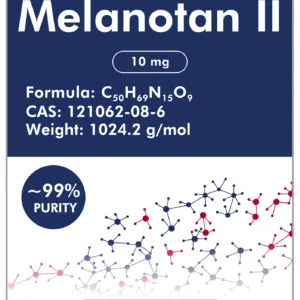
Melanotan 2
Melanotan 2 is a synthetic cyclic heptapeptide analogue of alpha-MSH, engineered at the University of Arizona as a more potent and metabolically stable derivative. Its cyclic lactam structure provides resistance to enzymatic degradation and amplifies receptor binding activity across multiple melanocortin receptor subtypes. Unlike Melanotan 1, Melanotan 2 is a non-selective melanocortin agonist with significant activity at MC1R, MC3R, and MC4R simultaneously (PMID: 16412534).
The MC1R component drives rapid and pronounced melanogenesis, producing skin pigmentation that develops faster than the gradual response observed with the MC1R-selective Melanotan 1. The MC4R activation component drives central nervous system effects studied in reproductive biology and energy regulation research. The MC3R component is involved in energy homeostasis modelling. This multi-receptor activity makes Melanotan 2 a distinct research tool from Melanotan 1. Where Melanotan 1 isolates skin pigmentation mechanisms, Melanotan 2 allows simultaneous investigation of how the melanocortin system integrates pigmentation, energy regulation, and reproductive signalling. Researchers should note that Melanotan 2 remains in the preclinical research domain. It is not FDA-approved for any indication and is not expected to return to legal compounding under the 2026 regulatory review.
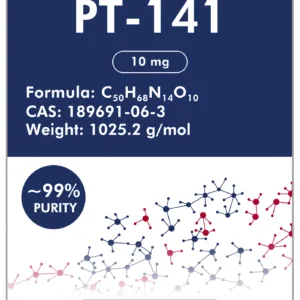
PT-141
PT-141, known generically as bremelanotide, is a synthetic cyclic heptapeptide lactam analogue developed as a structural derivative of Melanotan 2. The key structural change creates a receptor binding profile specifically biased toward MC3R and MC4R while substantially reducing MC1R activity, redirecting the research focus from skin pigmentation to central nervous system melanocortin pathway modulation. PT-141 activates MC3R and MC4R receptors in the hypothalamus and limbic regions, stimulating dopamine release in the medial preoptic area and initiating neurogenic arousal through central pathway activation rather than peripheral vascular mechanisms. In clinical development, PT-141 achieved FDA approval in 2019 as Vyleesi for the treatment of hypoactive sexual desire disorder in premenopausal women, and Phase II clinical trials also documented improved erectile function in men with organic erectile dysfunction in crossover studies (PMID: 16412534).
GHK-Cu
GHK-Cu (glycyl-L-histidyl-L-lysine copper) is a naturally occurring copper-binding tripeptide found in human plasma whose concentration declines from approximately 200 ng/mL at age 20 to 80 ng/mL by age 60. It is the most extensively published skin repair peptide in the research literature, with over 100 indexed PubMed publications documenting its effects on dermal biology across four decades.
In skin research specifically, GHK-Cu stimulates collagen I and III synthesis, elastin production, and glycosaminoglycan expression in human dermal fibroblasts, while modulating matrix metalloproteinases to support balanced collagen turnover rather than net degradation. A 12-week clinical trial applying GHK-Cu cream to the facial skin of 71 women with mild to advanced photoageing increased skin density and thickness, reduced fine lines and coarse wrinkles, improved skin laxity and clarity, and strongly stimulated dermal keratinocyte proliferation. In a separate 12-week study, GHK-Cu applied to thigh skin improved collagen production in 70% of treated women, outperforming both vitamin C cream and retinoic acid on the same endpoint. At the gene expression level, GHK-Cu has been documented to influence over 4,000 human genes through epigenetic mechanisms, including genes governing antioxidant defence, anti-inflammatory signalling, and tissue repair, positioning it as a uniquely broad-spectrum skin research compound distinct from the melanocortin peptides in this category.
Researchers studying GHK-Cu for systemic skin repair and cellular longevity will find additional compounds targeting age-related biological pathways in the anti-ageing peptides category.
Peptides for Tan Skin
Research interest in peptides for tan skin has grown considerably over the past decade as scientists seek to understand whether photoprotective tanning can be induced without the UV-driven DNA damage that initiates the natural melanisation response. The biological basis for this research centres on the melanocortin receptor system, specifically MC1R, the receptor that governs eumelanin synthesis in melanocytes. Eumelanin is the brown-black pigment produced during tanning that provides genuine photoprotection by absorbing UV photons and dissipating them as heat. When this pigment is produced in sufficient quantity, it reduces the penetration of UV radiation to the basal layer of the skin where DNA damage and skin cancer risk accumulate.
The two melanocortin peptides most studied for producing tan skin in research models are Melanotan 1 and Melanotan 2. Melanotan 1 produces a gradual, even tan through selective MC1R activation without systemic effects, representing the cleaner experimental model for studying melanogenesis independently of other melanocortin pathway activity. Melanotan 2 produces faster and more pronounced skin darkening through its broader receptor profile but simultaneously activates central nervous system melanocortin pathways, which must be accounted for in study design. Both peptides produce eumelanin specifically, which means the pigmentation they generate in research models is the same form of melanin that provides UV photoprotection in naturally tanned skin, unlike dihydroxyacetone-based topical products which produce surface-layer melanoidins that offer minimal UV protection.
For researchers studying peptide injection for tan skin and the molecular pathways governing melanogenesis, the compound selection between Melanotan 1 and Melanotan 2 depends on whether receptor selectivity is an experimental requirement. Studies requiring clean MC1R isolation use Melanotan 1. Studies investigating the integrated melanocortin system, including CNS components, use Melanotan 2. Both compounds are available from Liberty Peptides at 99%+ HPLC-verified purity with a full Certificate of Analysis for every batch.
Researchers requiring pre-formulated combinations of melanocortin and repair peptides for multi-pathway skin biology protocols will find relevant options in the peptide blends category.
Melanocortin Receptor Selectivity Comparison
The research application of each melanocortin compound in this category is defined by its receptor binding profile. The table below maps each compound to its receptor targets and primary research application, allowing researchers to select the appropriate tool for a specific study design without unintended cross-receptor activation confounding results.
| Compound | MC1R | MC3R | MC4R | Primary Research Application | Regulatory Status |
|---|---|---|---|---|---|
| Melanotan 1 (Afamelanotide) | High selectivity | Minimal | Minimal | Melanogenesis, photoprotection, UV damage models, tan skin biology | FDA-approved (EPP indication, Scenesse) |
| Melanotan 2 | Active | Active | Active | Integrated melanocortin system, pigmentation and CNS pathway research | Preclinical only, not FDA-approved |
| PT-141 (Bremelanotide) | Minimal | Active | Primary target | Central melanocortin pathway, sexual function neuroscience | FDA-approved (HSDD indication, Vyleesi) |
| GHK-Cu | No melanocortin activity | No melanocortin activity | No melanocortin activity | Skin repair, collagen synthesis, anti-ageing dermal biology | Research compound, not FDA-approved |
GHK-Cu is included in this table to illustrate that skin research peptides span two distinct mechanistic families. The melanocortin compounds govern pigmentation through receptor-mediated melanogenesis. GHK-Cu governs skin repair and regeneration through extracellular matrix regulation and epigenetic gene modulation, with no interaction with the melanocortin receptor system. Researchers studying skin biology comprehensively may use both compound classes to investigate complementary aspects of dermal physiology.
Frequently Asked Questions
What are skin research peptides?
Skin research peptides are synthetic amino acid sequences studied in laboratory settings for their effects on skin biology including melanogenesis, photoprotection, extracellular matrix remodelling, and collagen synthesis. The category spans two mechanistic families. Melanocortin peptides including Melanotan 1 and Melanotan 2 target the melanocortin receptor system to study pigmentation and tanning biology. GHK-Cu targets collagen synthesis pathways and epigenetic gene regulation relevant to skin repair and ageing. All Liberty Peptides skin compounds are supplied strictly for in-vitro laboratory research and are not for human use.
Which peptide is best studied for producing tan skin in research models?
Melanotan 1 is the most clinically validated peptide for studying melanogenesis and tan skin biology, having received FDA approval for erythropoietic protoporphyria and documented 47% fewer sunburn cells and significantly enhanced tanning in Phase I trials combined with UV-B exposure. It provides clean MC1R-selective melanogenesis without systemic melanocortin effects, making it the appropriate reference compound for isolating skin pigmentation mechanisms. Melanotan 2 produces faster and more pronounced skin darkening through its broader MC1R, MC3R, and MC4R profile but simultaneously activates central nervous system pathways that must be controlled for in study design.
What is the difference between Melanotan 1 and Melanotan 2 for tan skin research?
Melanotan 1 is a linear 13-amino acid peptide with high MC1R selectivity that produces gradual, even skin darkening through eumelanin synthesis without CNS activity. It is appropriate for studies isolating tan skin biology from systemic melanocortin effects. Melanotan 2 is a cyclic heptapeptide with non-selective MC1R, MC3R, and MC4R activation producing faster skin darkening alongside central nervous system effects including reproductive biology and appetite regulation responses. The choice between them depends on whether receptor selectivity is an experimental requirement.
How does GHK-Cu fit into skin research alongside tanning peptides?
GHK-Cu addresses a different aspect of skin biology from the melanocortin peptides. While Melanotan 1 and Melanotan 2 study melanogenesis and pigmentation, GHK-Cu is studied for collagen synthesis, matrix metalloproteinase regulation, dermal fibroblast activation, and epigenetic gene modulation related to skin ageing and repair. The two compound classes have no mechanistic overlap, making them complementary in comprehensive skin biology research protocols where both pigmentation and tissue repair pathways are under investigation.
What purity are Liberty Peptides skin compounds?
All Liberty Peptides skin research peptides, including Melanotan 1, Melanotan 2, PT-141, and GHK-Cu, are independently tested to a minimum of 99%+ purity via HPLC and mass spectrometry by a certified US laboratory. The Certificate of Analysis for every batch is downloadable and searchable by lot number at libertypeptides.co/certificate-of-analysis.
Are skin research peptides legal in the USA?
Melanotan 1 and PT-141 are FDA-approved pharmaceuticals for specific indications and are not scheduled controlled substances as research chemicals. Melanotan 2 is not FDA-approved and is expected to remain on Category 2 of the FDA bulk drug substances list following the 2026 regulatory review. GHK-Cu is not a scheduled controlled substance. All Liberty Peptides products are sold strictly for legitimate laboratory research use by qualified researchers and are not for human or animal consumption of any kind.
GHK-Cu is also available in oral capsule form for researchers investigating systemic tripeptide delivery as an alternative to topical and injectable administration in the peptide capsules category.
All products on this page are for in-vitro laboratory research use only. Not for human or animal consumption.
Showing all 4 results