
Weight Management Peptides
Weight Management Research Peptides | Semaglutide, Tirzepatide, Retatrutide | Liberty Peptides
Introduction
Weight management peptides are one of the largest and fastest-growing categories in metabolic research. GLP-1 receptor agonists and their multi-receptor derivatives, including Semaglutide, Tirzepatide, and Retatrutide, are now among the most intensively studied compounds in obesity, insulin resistance, and metabolic syndrome. Over the past five years, they have generated more clinical trial data than any other peptide class.
At Liberty Peptides, every weight management compound is independently tested to a minimum purity of 99% using HPLC and mass spectrometry by certified laboratories in the United States. Each batch includes a full Certificate of Analysis confirming purity, molecular identity, lot number, and test date. All products are supplied strictly for in-vitro laboratory research and are not intended for human or animal consumption.
-
Weight Management Peptides
AOD-9604 (5mg)
Original price was: $40.00.$38.00Current price is: $38.00. Add to cart -
Weight Management Peptides
Fundayo
Original price was: $113.00.$99.00Current price is: $99.00. Add to cart -
Weight Management Peptides
Retatrutide (GLP-3)
Price range: $30.00 through $85.00 Select options This product has multiple variants. The options may be chosen on the product page -
Weight Management Peptides
Tirzepatide (GLP-2)
Price range: $30.00 through $85.00 Select options This product has multiple variants. The options may be chosen on the product page

Semaglutide is a GLP-1 receptor agonist and serves as the benchmark for incretin-based research. In the STEP trials published in the New England Journal of Medicine, a 2.4 mg dose produced an average body weight reduction of about 15% in participants with obesity. Its mechanism includes delayed gastric emptying, suppression of appetite signaling in the hypothalamus, and enhanced glucose-dependent insulin secretion.
Researchers studying GH axis compounds alongside GLP-1 peptides will find additional growth hormone secretagogues in the growth hormone peptides category.
Tirzepatide builds on this foundation as a dual GIP and GLP-1 receptor agonist. By adding glucose-dependent insulinotropic polypeptide receptor activation, it delivers stronger metabolic effects. In the SURMOUNT-1 trial, a 15 mg weekly dose produced an average weight reduction of 20.9%, representing a significant improvement over single-receptor compounds. It is approved in clinical settings under the brand names Mounjaro and Zepbound.
Retatrutide represents the next generation of research peptides. It targets GLP-1, GIP, and glucagon receptors simultaneously. Phase 2 data published in the New England Journal of Medicine reported up to 24.2% mean weight reduction at 48 weeks. Phase 3 TRIUMPH-4 data later showed up to 28.7% at 68 weeks at higher doses, making it the most effective compound reported in this class to date.
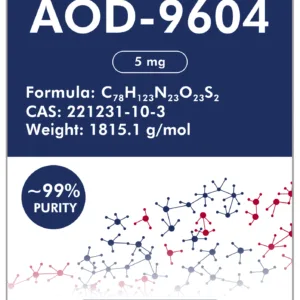
AOD-9604 is a 16-amino acid peptide derived from the C-terminal region of human growth hormone. It is studied for its ability to stimulate fat breakdown and inhibit fat formation through beta-3 adrenergic receptor activity. Unlike growth hormone, it does not activate the GH receptor or influence IGF-1 or insulin sensitivity, making it useful for studying fat metabolism independently of appetite pathways.
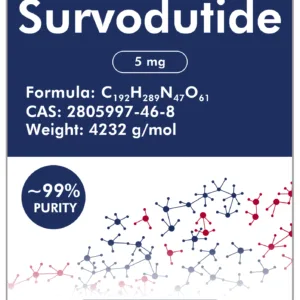
Survodutide is a dual GIP and glucagon receptor agonist currently in Phase 3 clinical trials. It offers a different mechanistic profile compared to Tirzepatide and is being evaluated in comparative metabolic studies.
All Liberty Peptides weight management compounds are stored at minus 20 degrees Celsius from receipt through dispatch. Orders placed before 12 PM EST, Monday through Friday, are shipped the same day.
The Incretin Agonist Research Landscape
Evolution of Multi-Receptor Targeting
The development of weight management peptides has progressed from single receptor activation to multi-receptor targeting. This shift allows researchers to better understand complex metabolic pathways and design more advanced study protocols.
GLP-1 Receptor Activation
GLP-1 receptor activation is the core mechanism shared by most compounds in this category. It produces three key effects in research settings. It slows gastric emptying, which prolongs satiety. It suppresses appetite through central signaling in the brain. It also enhances glucose-dependent insulin secretion, improving metabolic balance without causing hypoglycemia under normal conditions.
Research using functional MRI has shown that semaglutide can alter brain responses to food cues, reducing the perceived reward value of high-calorie foods. This central effect distinguishes GLP-1 compounds from peptides that act only on peripheral tissues, such as AOD-9604.
GIP Receptor Co-Activation
Tirzepatide introduces GIP receptor activation alongside GLP-1 activity. This combination enhances insulin response and may improve lipid metabolism in adipose tissue. It has also been associated with improved gastrointestinal tolerability compared to GLP-1-only compounds at similar doses. Clinical data from the SURMOUNT-1 trial showed a mean weight reduction of 20.9% at 72 weeks.
Glucagon Receptor Co-Activation
Retatrutide expands the mechanism further by activating the glucagon receptor. This adds thermogenic effects and increases energy expenditure through hepatic fat oxidation. It also promotes visceral fat reduction through pathways that do not rely solely on appetite suppression. Clinical data has shown weight reductions ranging from 24.2% at 48 weeks to 28.7% at 68 weeks.
AOD-9604 Mechanism
AOD-9604 works through a completely different pathway from incretin-based peptides. Research indicates it influences beta-3 adrenergic receptor activity in fat cells, promoting lipolysis and reducing lipogenesis. Studies in animal models have shown reductions in body fat associated with this mechanism.
Importantly, AOD-9604 does not bind to the growth hormone receptor and does not stimulate IGF-1 production. This makes it a valuable compound for studying fat metabolism without affecting growth hormone signaling.
AOD-9604 is frequently studied alongside oral metabolic compounds and researchers may also find relevant formulations in the peptide capsules category.
All research referenced in this section is based on preclinical or Phase 2 and Phase 3 clinical data. These compounds are not approved for therapeutic use and are supplied strictly for laboratory research purposes.
Frequently Asked Questions
What are GLP-1 research peptides?
GLP-1 receptor agonists are synthetic peptides that mimic the natural GLP-1 hormone released after food intake. In research settings, they are studied for their effects on appetite regulation, gastric emptying, glucose control, and metabolic signaling. Semaglutide, Tirzepatide, and Retatrutide are the most widely studied compounds in this category.
What is the difference between Semaglutide, Tirzepatide, and Retatrutide?
Semaglutide activates only the GLP-1 receptor. Tirzepatide activates both GLP-1 and GIP receptors. Retatrutide activates GLP-1, GIP, and glucagon receptors. Each additional receptor target has been associated with greater metabolic effects in clinical research, with average weight reductions increasing from about 15% to around 21% and up to 24 to 28% depending on the study.
What is AOD-9604 and how is it different?
AOD-9604 is a synthetic fragment of human growth hormone. Unlike GLP-1 compounds, it does not act on appetite or central signaling. Instead, it works at the level of adipose tissue by influencing beta-3 adrenergic receptors to promote fat breakdown and reduce fat storage. It does not affect the growth hormone receptor or IGF-1 levels.
What purity standards are used?
All Liberty Peptides weight management compounds are tested to a minimum purity of 99% using HPLC and mass spectrometry. Each batch includes a Certificate of Analysis with full verification details, including purity, molecular identity, lot number, and test date.
Is Retatrutide FDA approved?
Retatrutide is not approved by the FDA. It is currently an investigational compound undergoing Phase 3 clinical trials. It is supplied only for in-vitro laboratory research and is not intended for human or animal use.
Are these peptides legal in the United States?
Semaglutide, Tirzepatide, Retatrutide, Survodutide, and AOD-9604 are not classified as controlled substances in the United States. They can be legally sold and purchased for laboratory research purposes. They are not approved for over-the-counter use or for applications outside regulated research environments.
For researchers studying multi-pathway metabolic protocols, the peptide blends category contains pre-formulated combinations covering complementary research domains.
Showing all 6 results
-
Weight Management Peptides
AOD-9604 (5mg)
Original price was: $40.00.$38.00Current price is: $38.00. Add to cart -
Weight Management Peptides
Fundayo
Original price was: $113.00.$99.00Current price is: $99.00. Add to cart -
Weight Management Peptides
Retatrutide (GLP-3)
Price range: $30.00 through $85.00 Select options This product has multiple variants. The options may be chosen on the product page -
Weight Management Peptides
Tirzepatide (GLP-2)
Price range: $30.00 through $85.00 Select options This product has multiple variants. The options may be chosen on the product page